$69
Independent analytical testing performed on supported batches.
Documentation linked to production and verification records.
Verification resources available for supported products and batches.
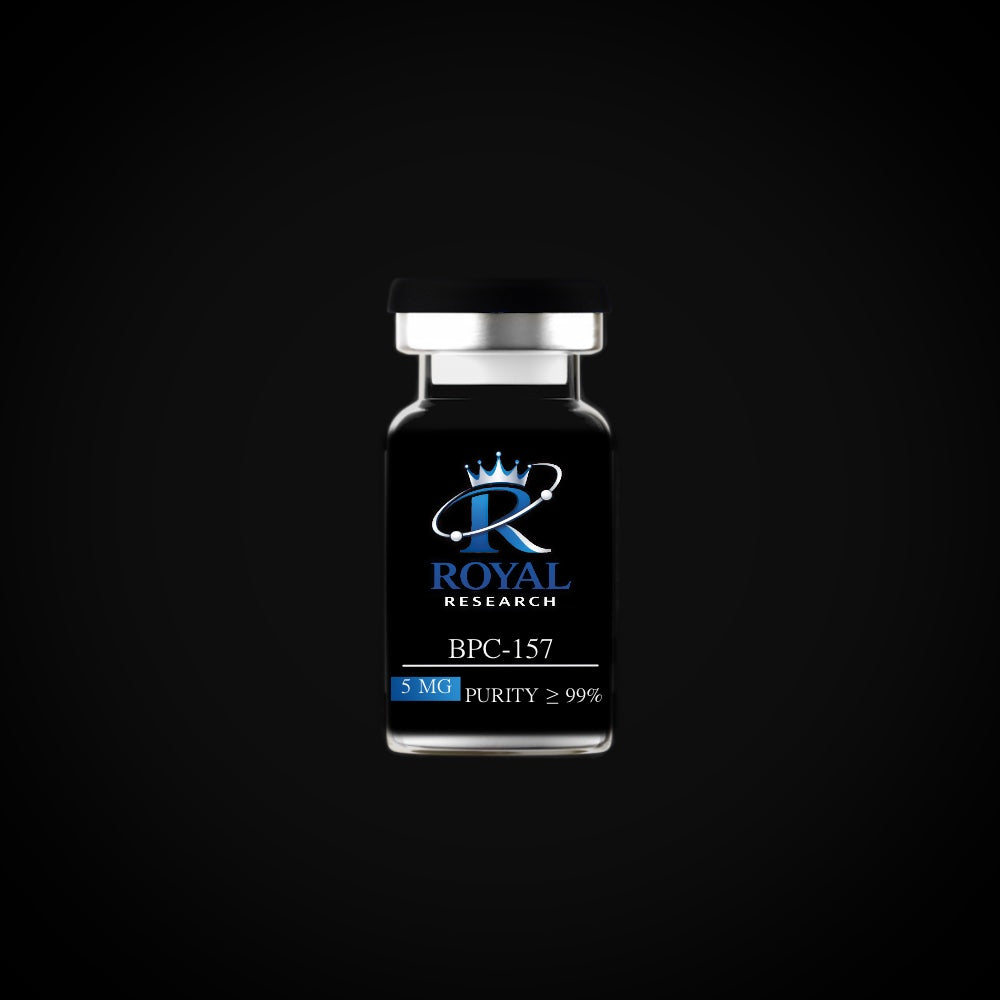
Synonym: Body Protection Compound-157
CAS Number: 137525-51-0
Molecular Formula: C₆₂H₉₈N₁₆O₂₂
Molecular Weight: ~1419.5 g/mol
Structure: Synthetic pentadecapeptide (15 amino acids) derived from a partial sequence of human gastric proteins
BPC-157 is a synthetic peptide consisting of a 15-amino acid sequence derived from a region of a naturally occurring protein found in gastric tissue. It is characterized by high stability in gastric conditions and resistance to enzymatic degradation relative to many short-chain peptides.
The compound has been studied in various experimental models for its interaction with cellular repair mechanisms, angiogenic signaling pathways, and cytoprotective processes.
BPC-157 exhibits a multi-pathway mode of action, with observed interactions across several biological systems:
Angiogenic Modulation
Upregulation of vascular endothelial growth factor (VEGF) signaling
Promotion of endothelial cell migration and vessel formation
Nitric Oxide (NO) System Interaction
Modulation of nitric oxide synthesis and signaling pathways
Potential effects on vascular tone and microcirculation
Cytoprotective Activity
Interaction with pathways involved in cell survival and stress response
Observed influence on epithelial and endothelial integrity
Extracellular Matrix & Tissue Signaling
Involvement in fibroblast activity and collagen-related processes
Modulation of signaling relevant to tissue remodeling
The peptide’s activity appears to be pleiotropic, involving coordinated effects across vascular, cellular, and signaling systems rather than a single receptor-specific pathway.
Demonstrates stability in gastric and enzymatic environments
Low molecular weight relative to larger peptide therapeutics
Rapid systemic distribution observed in experimental models
Metabolized via standard peptide degradation pathways
BPC-157 is a linear pentadecapeptide with the sequence:
Gly-Glu-Pro-Pro-Pro-Gly-Lys-Pro-Ala-Asp-Asp-Ala-Gly-Leu-Val
Key features include:
High proportion of proline residues, contributing to structural stability
Resistance to conformational breakdown in biologically active environments
No lipidation or large carrier modifications required for activity
BPC-157 is investigated in experimental settings involving:
Angiogenesis and vascular biology
Cellular repair and regeneration signaling
Gastrointestinal system models
Musculoskeletal and connective tissue research
It is frequently studied for its role in multi-system cytoprotective responses and signaling pathway interactions.
Typically supplied as a lyophilized powder
Requires reconstitution with a sterile solvent prior to use
Store at low temperatures (commonly -20°C or below) for long-term stability
Stable across a range of pH conditions relative to many peptides
Avoid repeated freeze-thaw cycles
This material is intended for laboratory research use only and is not approved for human or veterinary applications.