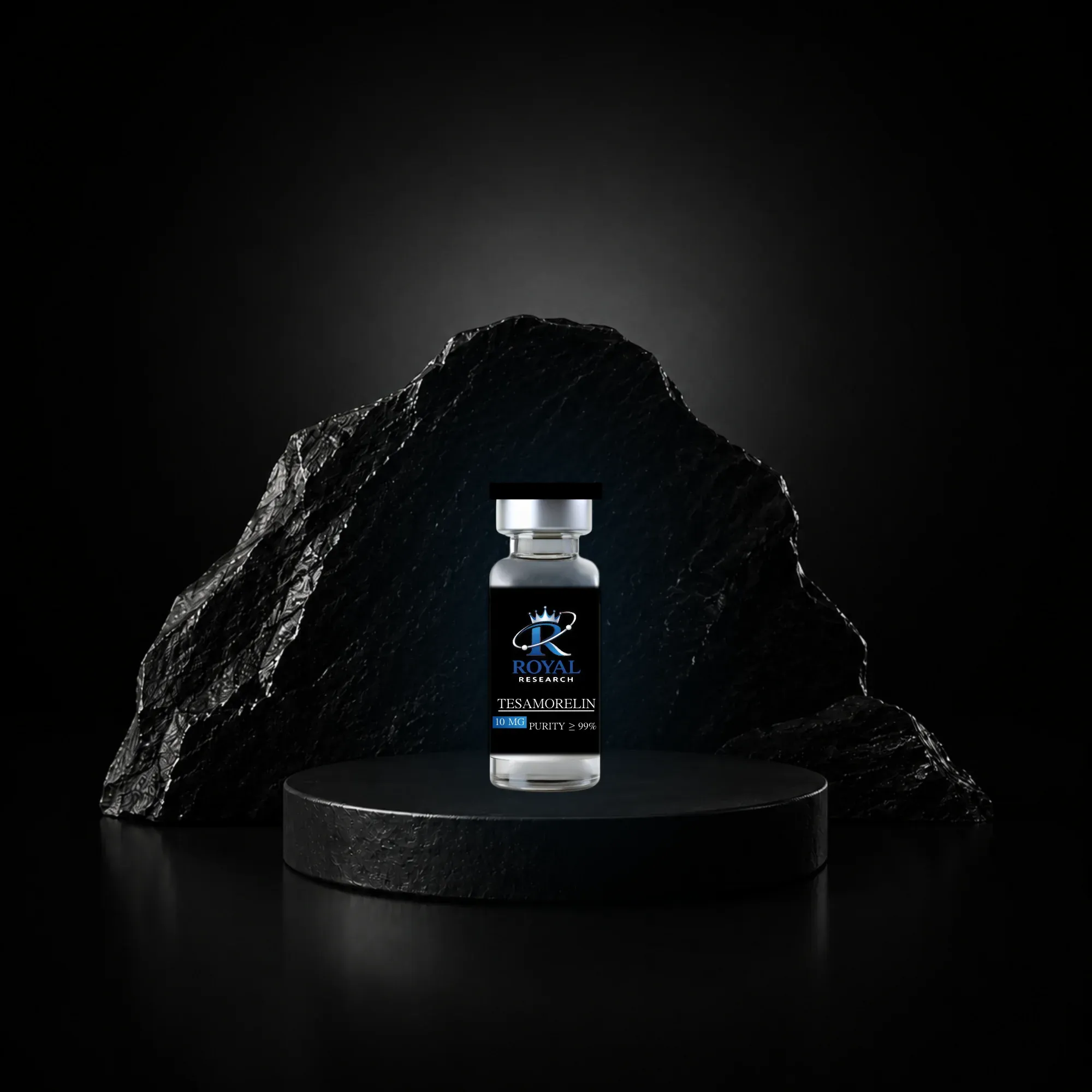
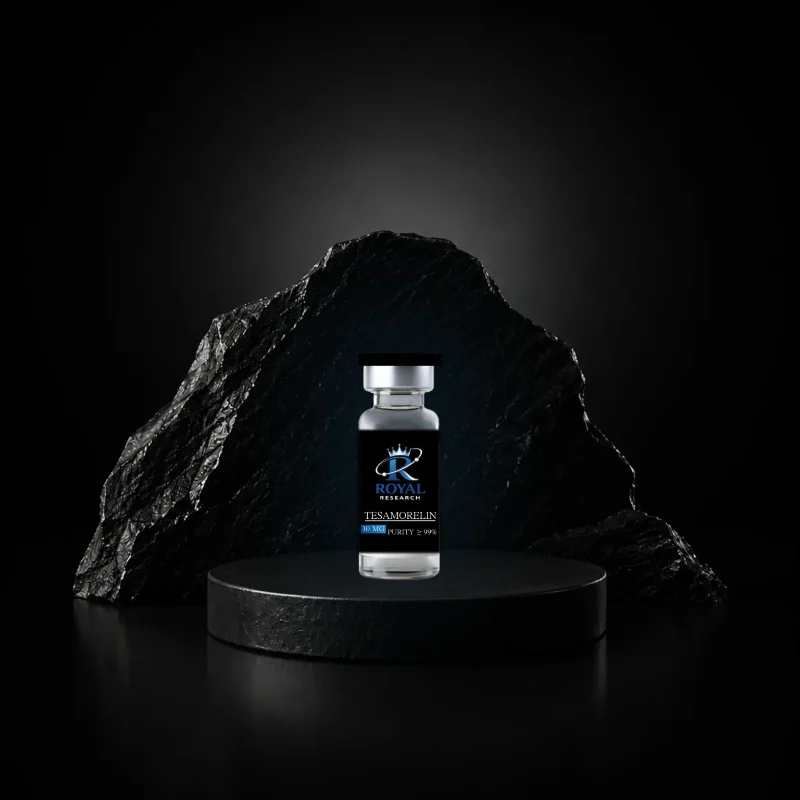
Tesamorelin
Synonym: TH9507
CAS Number: 218949-48-5
Molecular Formula: C₂₂₁H₃₆₆N₇₂O₆₇S
Molecular Weight: ~5135.9 g/mol
Structure: Stabilized analog of growth hormone-releasing hormone (GHRH 1–44)
Overview
Tesamorelin is a synthetic peptide analog of endogenous growth hormone-releasing hormone (GHRH), consisting of a modified 44-amino acid sequence. It is designed to stimulate the pituitary secretion of growth hormone (GH) by mimicking native hypothalamic signaling while exhibiting enhanced stability against enzymatic degradation.
Structural modifications allow Tesamorelin to maintain biological activity while improving resistance to rapid proteolysis compared to native GHRH.
Mechanism of Action
Tesamorelin functions as a selective GHRH receptor agonist, acting at the anterior pituitary:
-
Binds to GHRH receptors on somatotroph cells
-
Stimulates synthesis and pulsatile release of growth hormone (GH)
-
Indirectly increases circulating insulin-like growth factor-1 (IGF-1) via hepatic GH signaling
Key characteristics of its activity include:
-
Preservation of physiological pulsatility of GH secretion
-
Minimal direct interaction with ghrelin or other growth hormone secretagogue pathways
-
Feedback-regulated activity via endogenous somatostatin and IGF-1 levels
Pharmacokinetic Characteristics
-
Modified to improve in vivo stability relative to native GHRH
-
Short-to-moderate half-life compared to long-acting GH analogs
-
Activity dependent on intact hypothalamic–pituitary axis function
-
Primarily metabolized via proteolytic degradation
Structural Characteristics
Tesamorelin is based on the GHRH (1–44) sequence, with targeted modifications including:
-
Substitution of specific amino acids to reduce enzymatic cleavage
-
Retention of full-length peptide structure for receptor specificity
-
Maintenance of high affinity for the GHRH receptor (GHRH-R)
Unlike smaller GH secretagogues, Tesamorelin preserves the full receptor-binding domain, contributing to its selective mechanism of action.
Research Applications
Tesamorelin is utilized in research involving:
-
Growth hormone axis regulation
-
IGF-1 mediated signaling pathways
-
Adipose tissue metabolism and distribution
-
Endocrine function of the hypothalamic–pituitary axis
It is particularly relevant in studies examining physiological GH pulsatility and downstream metabolic effects mediated through endogenous hormone release.
Handling & Stability
-
Typically supplied as a lyophilized powder
-
Requires reconstitution with a sterile solvent prior to use
-
Should be stored at low temperatures (commonly -20°C or below) for long-term stability
-
Avoid repeated freeze-thaw cycles
Note
This material is intended for laboratory research use only and is not approved for human or veterinary applications.
Every batch undergoes independent third-party analytical testing for purity, identity, and consistency. Relevant documentation is maintained to support verification and traceability.
Yes. Analytical documentation is maintained for supported products and batches. Verification resources are available to help researchers review relevant testing information.
Each production batch is assigned documentation that links materials to associated testing records and verification resources, helping maintain consistency and transparency.