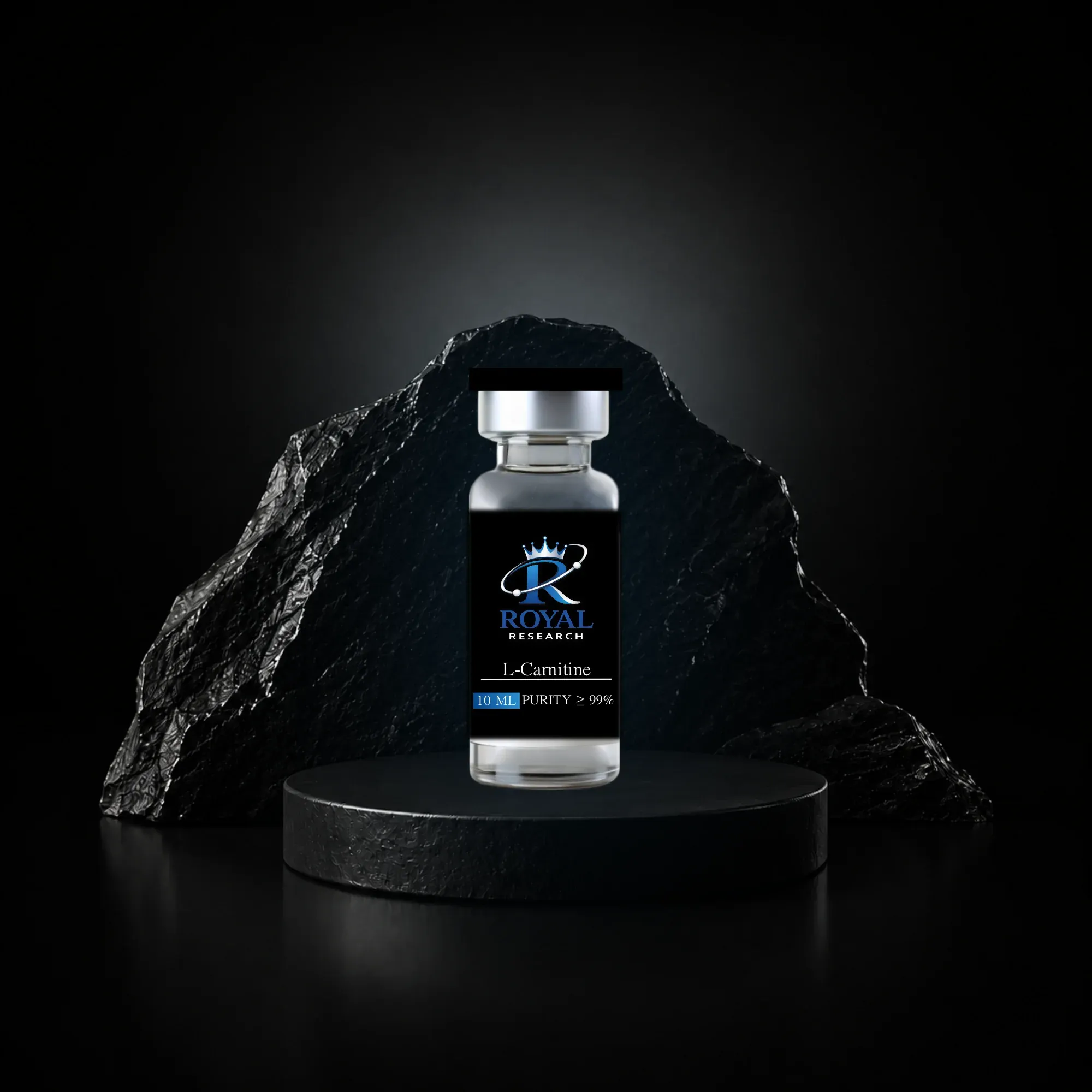
L-Carnitine

$60

Independent Verification Available

L-Carnitine is a naturally occurring metabolic compound involved in mitochondrial fatty acid transport and cellular energy production. It is widely studied in research focused on lipid metabolism, mitochondrial function, bioenergetics, and metabolic regulation.
Free shipping over $50

Verification & Standards

Third-Party Tested

Independent analytical testing performed on supported batches.

Batch Traceability

Documentation linked to production and verification records.

Accessible Verification

Verification resources available for supported products and batches.

Retatrutide

L-Carnitine

Synonym: Levocarnitine

CAS Number: 541-15-1

Molecular Formula: C₇H₁₅NO₃

Molecular Weight: 161.20 g/mol

Structure: Naturally occurring quaternary ammonium compound involved in fatty acid transport


Overview

L-Carnitine is a naturally occurring molecule synthesized from the amino acids lysine and methionine. It plays a critical role in cellular energy metabolism by facilitating the transport of long-chain fatty acids into mitochondria, where they may undergo beta-oxidation.

Due to its central role in energy production, L-Carnitine is widely studied in research involving mitochondrial function, lipid metabolism, metabolic regulation, and cellular bioenergetics.


Mechanism of Action

L-Carnitine functions primarily as a transporter of fatty acids across the mitochondrial membrane.

  • Fatty Acid Transport
    • Facilitates movement of long-chain fatty acids into mitochondria
    • Supports beta-oxidation pathways involved in energy production
  • Mitochondrial Metabolism
    • Assists in maintaining mitochondrial energy generation processes
    • Contributes to efficient utilization of lipid substrates
  • Acyl Group Regulation
    • Participates in the transport and buffering of acyl compounds
    • Supports metabolic flexibility during changing energy demands
  • Cellular Energy Homeostasis
    • Influences pathways involved in energy utilization and substrate metabolism
    • Supports overall bioenergetic balance within cells

Its biological importance stems from its role as a key mediator between lipid metabolism and mitochondrial function.


Pharmacokinetic Characteristics

  • Naturally present in mammalian tissues
  • Highest concentrations found in skeletal muscle and cardiac tissue
  • Transported via specialized carnitine transport systems
  • Participates in endogenous metabolic recycling pathways

Structural Characteristics

L-Carnitine is characterized by:

  • A quaternary ammonium structure
  • High water solubility
  • Endogenous synthesis from lysine and methionine
  • Essential role in mitochondrial fatty acid transport

Its structure enables interaction with enzymes involved in the carnitine shuttle system responsible for intracellular lipid transport.


Research Applications

L-Carnitine is commonly studied in research involving:

  • Mitochondrial function
  • Fatty acid metabolism
  • Cellular energy production
  • Metabolic flexibility
  • Bioenergetics
  • Lipid utilization pathways

It remains a widely utilized research compound for investigations examining the relationship between energy metabolism and mitochondrial activity.


Handling & Stability

  • Typically supplied as a sterile solution or lyophilized material
  • Store according to manufacturer specifications
  • Protect from excessive heat and prolonged light exposure
  • Avoid contamination during handling
  • Maintain appropriate storage conditions for long-term stability

Note

This material is intended for laboratory research use only and is not approved for human or veterinary applications.
Every batch undergoes independent third-party analytical testing for purity, identity, and consistency. Relevant documentation is maintained to support verification and traceability.
Yes. Analytical documentation is maintained for supported products and batches. Verification resources are available to help researchers review relevant testing information.
Each production batch is assigned documentation that links materials to associated testing records and verification resources, helping maintain consistency and transparency.
Frequently Paired

Frequently paired research

Frequently paired research materials. Researchers often evaluate complementary materials alongside this product depending on the objectives of a study.
Retatrutide

$129

Still have questions?

Need help interpreting specifications, verification documentation, or research applications?