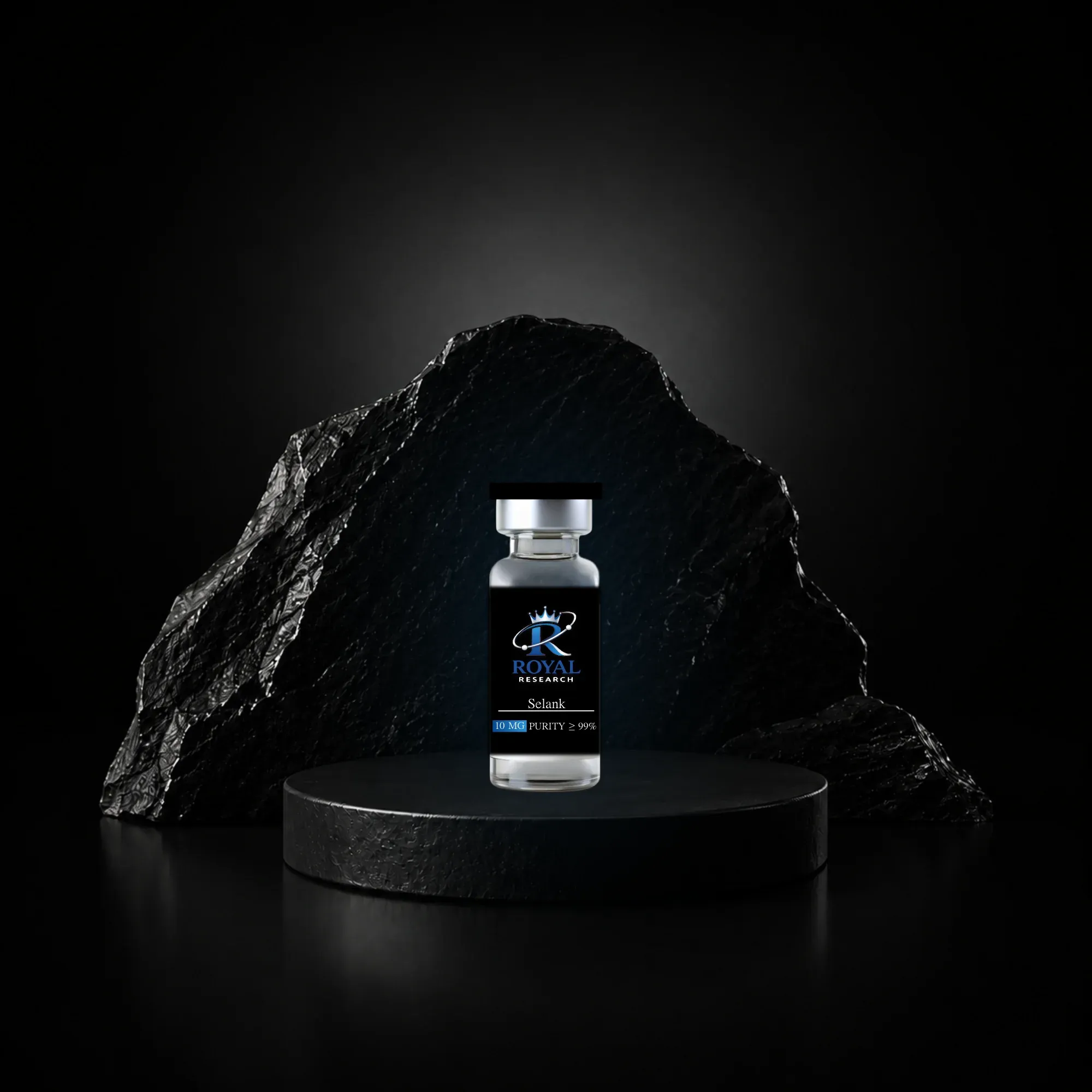
Selank
Synonym: TP-7, Thr-Lys-Pro-Arg-Pro-Gly-Pro
CAS Number: 129954-34-3
Molecular Formula: C₃₃H₅₇N₁₁O₉
Molecular Weight: 751.87 g/mol
Structure: Synthetic heptapeptide derived from the endogenous immunomodulatory peptide tuftsin
Overview
Selank is a synthetic peptide developed from tuftsin, a naturally occurring immunomodulatory peptide involved in immune system signaling. Through structural modification, Selank exhibits enhanced stability and prolonged biological activity while retaining interactions with neurobiological and immunological pathways.
The peptide is widely studied in research involving neurotransmitter regulation, neuropeptide signaling, stress-response mechanisms, cognitive function, and neuroimmune interactions.
Mechanism of Action
Selank appears to exert modulatory effects across multiple neurological and immunological systems:
- Neurotransmitter Regulation
- Influences signaling pathways associated with GABAergic activity
- Modulates communication within central nervous system networks
- Neuropeptide Signaling
- Interacts with endogenous peptide-regulated pathways
- Influences neurochemical balance and neuronal communication
- Neuroimmune Activity
- Derived from a peptide involved in immune regulation
- Studied for interactions between immune and neurological signaling systems
- Stress Response Modulation
- Investigated for effects on physiological adaptation pathways
- Associated with regulation of stress-related neurochemical responses
The peptide’s biological activity appears to involve broad neuromodulatory mechanisms rather than direct activation of a single receptor target.
Pharmacokinetic Characteristics
- Synthetic heptapeptide structure
- Improved stability relative to endogenous tuftsin
- Subject to normal peptide degradation pathways
- Demonstrates activity within neurobiological signaling systems
Structural Characteristics
Selank is composed of the amino acid sequence:
Thr-Lys-Pro-Arg-Pro-Gly-Pro
Key features include:
- Derived from the endogenous peptide tuftsin
- Seven-amino acid structure
- Water-soluble peptide architecture
- Designed for enhanced biological stability
Research Applications
Selank is commonly studied in research involving:
- Neurotransmitter signaling
- Neuropeptide biology
- Neuroimmune interactions
- Cognitive function research
- Stress-response mechanisms
- Central nervous system regulation
It remains a valuable research tool for investigating the relationship between neurological and immunological signaling pathways.
Handling & Stability
- Typically supplied as a lyophilized powder
- Requires reconstitution with a suitable sterile solvent prior to use
- Store at -20°C or below for long-term stability
- Protect from excessive heat, moisture, and prolonged light exposure
- Avoid repeated freeze-thaw cycles
Note
This material is intended for laboratory research use only and is not approved for human or veterinary applications.
Every batch undergoes independent third-party analytical testing for purity, identity, and consistency. Relevant documentation is maintained to support verification and traceability.
Yes. Analytical documentation is maintained for supported products and batches. Verification resources are available to help researchers review relevant testing information.
Each production batch is assigned documentation that links materials to associated testing records and verification resources, helping maintain consistency and transparency.